
Pobaca: Read Romance Novels
Moboreader Technology USA Co LtdBooks & Reference
4.0198.00 Reviews
- Version
- 6.1.5
- Installs
- 100.00K
- Age Rating
- Mature 17+
Screenshots

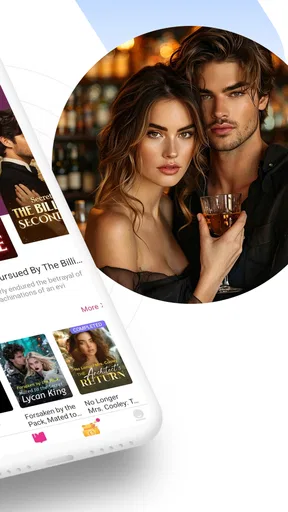

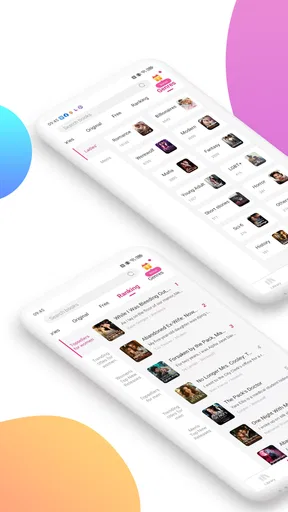
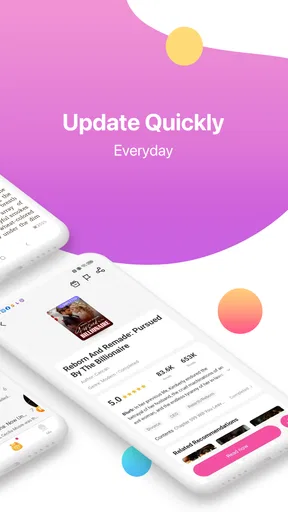
Our Review of Pobaca: Read Romance Novels
 Analysis by Appyee
I approached Pobaca: Read Romance Novels as a reading app rather than a general-purpose ebook library. Its focus is clear: romance, fantasy, and serialized stories for readers who want something easy to pick up whenever they have a spare moment. After spending time with that kind of reading flow, I found the app most appealing when I treated it like a pocket fiction feed, not like a replacement for every book service on my phone.
That distinction matters. People who enjoy discovering ongoing romantic plots may feel at home quickly, while readers who mainly want to load their own EPUB files, manage a personal library, or buy conventional ebooks from a broad catalog may find the experience less suitable. Pobaca is aimed at readers who want stories presented inside a dedicated mobile environment, with the convenience and compromises that come with that format.
How Pobaca feels in everyday reading
I find Pobaca most useful when I decide in advance what I want from a reading break: a few pages of a familiar story, or a little time exploring something new. That small distinction helps me avoid turning a spare moment into aimless browsing and gives me a clearer sense of whether its fiction-first approach fits my routine. It also makes the next question—how much control I have over the experience—more practical.
A quick start for short reading sessions
The strongest use case is the small reading window: a commute, a lunch break, a few minutes before sleep, or a quiet wait in a queue. Instead of deciding which book to open from a large personal collection, I could approach the app with a simpler question: which story should I continue now? That reduced decision-making is useful for anyone who likes romance fiction but often abandons reading because choosing a title takes too much effort.
The app is free to download, which makes trying its reading style relatively low-risk. It is published by Moboreader Technology USA Co Ltd and sits in the Books & Reference category. Its store summary points toward novels, romance, fantasy, and stories, so the experience is much more specialized than a traditional reference app or a neutral ebook reader.
In practical terms, I would expect the first moments of use to feel more immediate than setting up a library from scratch. A dedicated fiction app can be convenient because the reading material and the reading environment are brought together. The trade-off is that the reader has less control than with a simple document reader. If your priority is importing files, changing every detail of typography, or keeping books independent from a service, this is not the direction I would choose.
What affects the sense of speed
For a reading app, speed is not only about opening the application. The more important question is how quickly I can return to a story, move through a chapter, and recover my place after an interruption. Pobaca’s appeal depends heavily on that continuity. A reader who opens the app for five minutes does not want to spend most of that time navigating menus or trying to remember where a chapter ended.
The current version is 6.1.5, and the app supports Android 7.0 or later. Those details suggest a fairly broad range of compatible Android devices, but compatibility alone does not guarantee the same experience on every phone. Older hardware may handle ordinary text comfortably while feeling less responsive during heavier browsing or when several parts of the app are active at once.
My advice is to judge the app by your own reading pattern rather than by the opening screen. If you usually read one story at a time, the app should be easier to manage than if you constantly jump between many titles. Keeping a small active reading list can also make the experience feel faster, because you spend less time searching through choices and more time continuing the story you already started.
When heavier use becomes noticeable
The demanding moments are likely to come from browsing rather than from displaying plain text. Reading a chapter is a relatively simple task for a modern phone, but moving through a large fiction catalog, switching between stories, and repeatedly opening new pages can place more pressure on an older or busy device. I would not evaluate the app solely on how smoothly one chapter scrolls.
A realistic scenario is an evening when I browse several romance titles, sample a fantasy story, return to an earlier book, and then read multiple chapters. That session tests more than basic text rendering. It tests whether navigation remains understandable, whether the app returns me to the right place, and whether the phone remains comfortable to use after a longer period.
For heavy readers, a useful habit is to separate discovery from reading. I would browse when I have time, choose one or two stories, and then return to those titles during shorter breaks. This reduces repeated navigation and makes the app feel more focused. It also helps reveal whether the service suits your habits: if you enjoy constant exploration, the catalog-style approach may be a benefit; if you prefer a quiet, distraction-free reader, the extra discovery layer may feel like friction.
Resource demands are also personal. A newer phone with plenty of free storage and a healthy battery should be a more comfortable match than an aging device already struggling with everyday apps. I would avoid judging battery behavior from one short session, because screen brightness, network activity, and reading duration can influence the result more than the text itself. What I can say is that long sessions are where any reading app’s interface, navigation, and device comfort become more important than its basic ability to show words.
Reliability and recovering your reading flow
Reliability matters especially for serialized fiction. Losing a place in a reference article is annoying; losing the emotional moment at the end of a chapter is even more frustrating. When I assess an app like this, I pay attention to recovery after ordinary interruptions: leaving the app for a message, locking the screen, switching to another task, or returning later after the phone has cleared background activity.
I recommend making a simple personal routine around chapter endings. Before closing the app, I would finish the current screen or use whatever in-app reading position the app provides, then reopen the same story rather than relying on memory. This is not glamorous advice, but it reduces confusion when reading several titles at once. It is particularly useful for people who read in short bursts throughout the day.
Network conditions can also shape the feeling of reliability in a story service. A reader at home on a stable connection may experience a smoother flow than someone moving between weak signals. If a chapter takes longer to appear, I would first check whether the problem follows the connection or the device before deciding that the app itself is unstable. For offline-focused reading, a conventional ebook reader with locally stored files may be a better fit.
Another recovery question is what happens after an update or a long gap between sessions. Since the app is actively presented through a current version, I would keep the application updated when possible, but I would also avoid maintaining an unnecessarily complicated reading queue. A short list of current stories is easier to reconstruct than a crowded collection of half-read titles.
In-app purchases change the reading decision
The free entry point is helpful, but the presence of in-app purchases means the full reading experience deserves a little financial awareness. Individual purchase amounts range from $0.99 to $199.99, so the difference between casually trying a story and spending heavily on ongoing access can be substantial. I would not begin by purchasing broadly across several titles.
A better approach is to test the app with a story that genuinely matches your taste, notice how quickly you read, and decide whether the available free experience is enough for you. Readers who consume chapters rapidly should be especially careful, because small purchases can accumulate when repeated often. Setting a personal spending limit before becoming invested in a long romance plot is more sensible than making decisions at every cliffhanger.
This is also where Pobaca differs from a conventional library app or a reader built around books you already own. A standard ebook purchase tends to feel like acquiring a complete work, while serialized reading can encourage smaller, repeated decisions. Some readers enjoy that rhythm; others find it interrupts immersion. Neither response is wrong, but it is an important trade-off to understand before committing time to a story.
Age suitability and the kind of reader it serves
The content rating is Mature 17+, so I would not recommend treating Pobaca as a children’s reading app or handing it to a younger reader without supervision. The romance focus may be attractive to adults looking for dramatic relationships, fantasy settings, and emotionally intense plots, but the mature classification should be taken seriously when choosing who uses it.
I see the best audience as adult readers who enjoy mobile-first fiction and do not mind reading in installments. It can also suit someone who wants a convenient way to fill short breaks without carrying a physical novel. The app is less convincing for students seeking factual reference material, readers building a carefully organized digital library, or anyone who wants only public-domain books and no purchase prompts.
There is a useful middle ground for readers who already use a general ebook app. Pobaca can serve as a discovery and serialized-fiction companion rather than replacing that existing reader. I would keep long-form books in the app that handles my personal files best, then use Pobaca when I want a romance or fantasy story designed for quick mobile sessions. That division of roles avoids forcing one application to satisfy two very different reading needs.
Device limits and practical comfort
Android 7.0 support makes the app accessible to many older phones, but I would still consider the condition of the device. A phone may meet the operating-system requirement and yet provide an unpleasant experience if it has little free space, weak battery health, or too many background tasks. Text itself is not demanding, but the overall application experience includes browsing, loading, and returning to the reader.
Screen size is another practical consideration. A compact phone can be excellent for a few pages during a commute, while a larger display may be more comfortable for long evening sessions. I would test the default text size before judging readability, especially if you prefer larger type. Holding a phone for an hour can also become tiring, so a stand or a comfortable grip may matter more than a small difference in interface speed.
For older devices, I would keep expectations realistic. Use the app with other demanding applications closed, maintain some free storage, and avoid evaluating it while the phone is already hot or low on battery. These steps do not transform weak hardware, but they make it easier to tell whether a problem comes from the device or from the reading experience itself.
Three less-obvious ways to use it well
First, I would use Pobaca as a controlled sampler rather than an endless browsing destination. Choose one romance title and one fantasy title, read enough to understand which pacing you prefer, and then stop searching for a while. This makes the app more useful for discovering your next story and less likely to turn every spare minute into catalog scrolling.
Second, I would match the app to a specific daily routine. For example, a commuter could reserve one story for the morning trip and another for evening reading. Keeping those roles separate makes it easier to remember plot details and reduces the chance of opening the wrong title after a busy day. It also exposes whether the app’s return-to-reading flow works for your real schedule, not just for a relaxed test session.
Third, I would treat purchases as a pacing tool. Rather than buying whenever a chapter ends on a cliffhanger, decide in advance how much you are willing to spend on one story and pause when you reach that boundary. This keeps the financial side from being driven entirely by the emotional momentum of the fiction. It is a small change, but it matters more here than it would in a reader that mainly opens books you already own.
How it compares with familiar alternatives
Compared with a basic ebook reader, Pobaca is more specialized and more discovery-oriented. A basic reader wins when you have your own files, want a calmer interface, or need dependable access to books you purchased elsewhere. Pobaca wins when you want romance and fantasy stories presented in a service built around mobile reading rather than file management.
Compared with a public library app, it offers a different kind of convenience. Library services are often better for borrowing complete books without building a purchase habit, while Pobaca is more naturally suited to readers who enjoy following stories in installments. If your main concern is avoiding repeated in-app spending, the library route may be the better first choice where available.
Compared with a general reading platform, Pobaca’s narrower identity can be an advantage. You are less likely to open it looking for textbooks, manuals, or unrelated nonfiction. That focus is valuable if romance is your main interest, but limiting if you want one app to cover every kind of reading. I would choose it for genre discovery, not for a universal bookshelf.
My performance verdict
Pobaca: Read Romance Novels is a reasonable choice for adult readers who want romance, fantasy, and serialized fiction in a mobile-centered format. Its free entry point, broad Android compatibility, and focused subject matter make it easy to try. The app’s real value appears during short, repeated reading sessions, where quickly returning to a favorite story matters more than advanced library management.
My reservations are equally clear. The Mature 17+ rating limits its audience, the in-app purchase range calls for careful spending, and readers using older or heavily loaded phones should not expect identical responsiveness to newer devices. People who want complete ebooks, local file control, or a mostly purchase-free library experience will probably be happier with a conventional ebook or library app.
The app has an average rating of 4.0 from around 1.2 thousand ratings, with over 100 thousand installs, which suggests that it has found a real audience without making it a universal recommendation. I would try it if your ideal reading moment is a few chapters of romance or fantasy on your phone. I would skip it if your ideal reading moment is opening a carefully organized personal library and reading without serialized purchasing decisions.
In the end, the best way to use Pobaca is as a focused fiction companion, not as your only reading tool. Keep your expectations centered on convenient genre reading, test its recovery and comfort on your own device, and set a spending boundary before you become attached to a long-running story. With that approach, it can be an enjoyable addition to a reading routine without pretending to solve every ebook need.
Verdict
Strengths of Pobaca: Read Romance Novels
- Large selection of romance stories across multiple subgenres.
- Personalized recommendations help discover novels matching your interests.
- Offline reading makes saved chapters available without an internet connection.
- Regular updates add fresh stories and new chapters to the library.
- Simple reading interface with adjustable text and display settings.
Limitations of Pobaca: Read Romance Novels
- Many chapters or premium stories may require paid coins or subscriptions.
- Some novels can contain frequent ads between reading sessions.
- Story quality and editing may vary between different authors.
- Offline access may be limited to selected content or active downloads.
- A stable internet connection is often needed to sync reading progress.
Other Releases by Moboreader Technology USA Co Ltd
View All
MiniDrama: Stream Drama Shorts
Entertainment4.2

MoboReels: Good Reel Short TV
Entertainment4.1

Lera - Webnovels Romance
Books & Reference4.3

ReadNow: Good Novels & Fiction
Books & Reference4.3
Similar Picks in This Category
View All
Google Play Books & Audiobooks
Google LLC4.7

네이버 - NAVER
NAVER Corp.3.5

Wattpad - Read & Write Stories
Wattpad.com3.7

King James Bible - Verse+Audio
Ozion4.8

Bible Offline-KJV Holy Bible
Bíblia Offline4.9

Amazon Kindle: Reading App
Amazon Mobile LLC4.8
Frequently Asked Questions
What is Pobaca: Read Romance Novels?
Pobaca: Read Romance Novels is a mobile reading app focused on romance fiction and serialized stories. It offers access to different romance themes, including contemporary relationships, fantasy romance, drama, and stories featuring characters such as billionaires, werewolves, or powerful families. Chapters are generally presented in a convenient format for reading on a phone, making the app suitable for users who enjoy discovering new stories in short, regular reading sessions.
Is Pobaca: Read Romance Novels free to download and use?
Pobaca can generally be downloaded without an upfront purchase, but free access may be limited depending on the story and chapter. Many novel-reading apps use coins, credits, daily rewards, advertisements, or in-app purchases to unlock additional chapters. Before starting a long story, users should check the current pricing and reward system in the app, since the total cost of continuing a novel can vary considerably.
Does Pobaca offer offline reading?
Offline availability may depend on the specific version of Pobaca and the reading features enabled for an account. Some chapters may need to be opened while connected to the internet, and unlocked content is not necessarily available for permanent offline use. If offline reading is important to you, review the download or cache options inside the reader before purchasing credits or committing to a particular novel.
What types of romance stories can I find on Pobaca?
The app is aimed at readers who enjoy dramatic, emotionally intense romance and ongoing serialized fiction. Its catalog may include contemporary love stories, romantic suspense, fantasy relationships, supernatural themes, contract or billionaire romances, family conflicts, and stories involving secrets or revenge. Availability can change over time, so the selection shown in the app may differ by region, language, and current licensing arrangements.
Is Pobaca: Read Romance Novels suitable for all ages?
Pobaca should not automatically be considered suitable for children. Romance novels can contain mature themes, including relationship conflict, violence, manipulation, sexual references, or emotionally difficult situations, depending on the title. Parents and younger readers should check the store age rating and the content of individual stories before using the app. Adults should also review privacy, account, and payment settings before making purchases.
